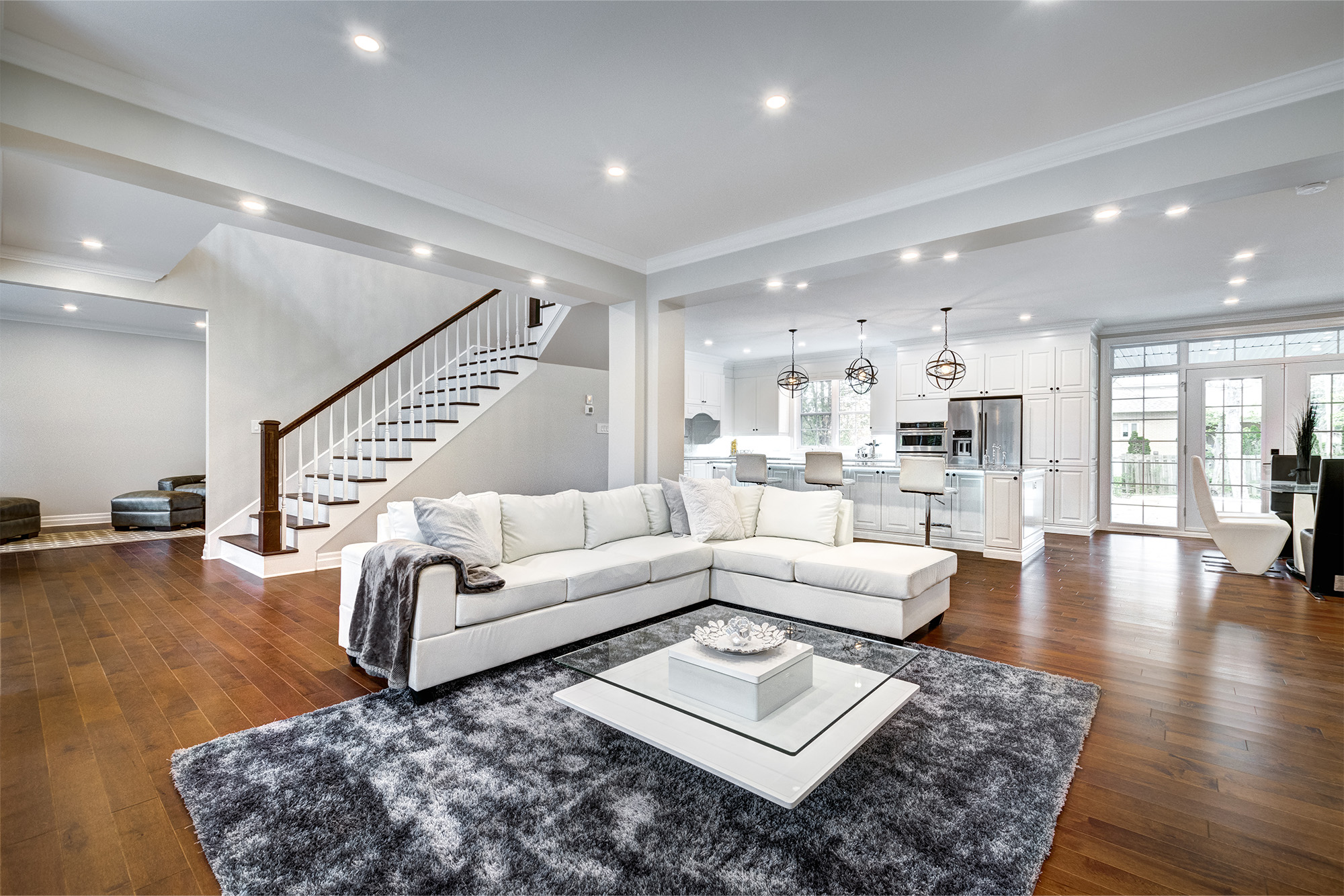
Open concept interiors can give your Naperville home a spacious, connected feel, but you may also find that large, uninterrupted rooms can be difficult to organize. Without walls separating your living room, dining area, and other spaces, furniture can sometimes look scattered rather than intentionally arranged.
An area rug can help you create visual structure without closing off the room. By choosing the right size, placement, and design, you can use an area rug to establish distinct zones while maintaining the open feeling you enjoy.
Create a Defined Living Area
If your living room shares space with another part of your home, an area rug can give the seating arrangement a clear boundary. You can position your sofa, chairs, and coffee table around the rug so the furniture feels connected rather than randomly placed throughout the room.
For a more polished look, choose a rug large enough for at least the front legs of your main seating pieces to rest on it. This creates a stronger visual connection between your furniture and helps your living area feel intentionally designed.
When selecting an area rug, you can also consider the flooring underneath it. If you have hardwood, laminate, or another hard surface, the rug can add softness and visual contrast while allowing the flooring to remain visible around the edges.
Use Rugs to Separate Functional Zones
Your open concept room may serve several purposes. You might have one area for relaxing, another for dining, and a smaller space for reading or working. Instead of relying on partitions, you can use rugs to visually separate these functions.
For example, a larger rug beneath your living room furniture can establish the main seating zone, while a separate rug beneath your dining table can distinguish the eating area. The result is a room that feels organized without sacrificing the openness of the floor plan.
If you are exploring flooring options for your home as part of a larger interior update, you can also browse area rugs to consider styles that complement your existing design.
Coordinate the Rug With Your Flooring
Your area rug does not need to match your flooring exactly. In fact, using subtle contrast can make both elements more noticeable. A patterned rug can add interest to a simple floor, while a more understated rug can allow distinctive flooring to remain the focal point.
As you plan your Naperville interior, consider how the rug works with your flooring color, furniture finishes, wall colors, and overall decorating style. You can also explore Great Western Flooring for additional flooring ideas that can help you create a cohesive look throughout connected spaces.
Make Your Open Concept Space Feel Intentional
With thoughtful placement, an area rug can do more than add comfort beneath your feet. It can help you organize an open floor plan, establish functional areas, and bring different design elements together.
If you are updating your Naperville home and want help finding flooring and area rug options that work together, contact Great Western Flooring to explore your options.